Ever imagined an entire nation pausing to sing, give gifts, and light up the night sky, all in honor of the Virgin Mary? Welcome to La Purísima in Nicaragua, a celebration so electrifying it’ll make your hometown’s Christmas parade look like a quiet book club meeting.
This isn’t just another religious festival gathering dust in history books. La Purísima in Nicaragua is a full-blown sensory explosion where faith meets fireworks, where strangers become family, and where the streets transform into open-air parties that last until dawn. Think Mardi Gras meets midnight Mass, with a distinctly Nicaraguan twist that you won’t find anywhere else on the planet.


Let’s cut through the confusion: what is La Purísima in Nicaragua? At its heart, it’s the country’s most beloved tribute to the Immaculate Conception of the Virgin Mary. But calling it “just a religious event” is like calling the Grand Canyon “a big ditch.”
La Purísima in Nicaragua unfolds as a nine-day novena (late November through December 8th), during which Nicaraguan families construct jaw-dropping home altars draped in blue and white, the Virgin’s colors and coincidentally, Nicaragua’s national flag colors. These aren’t your grandmother’s dusty church corners; we’re talking about elaborate shrines adorned with fresh flowers, flickering candles, paper doves, tropical fruits, and intricately decorated images of Mary that would make interior designers weep with envy.
The crescendo? La Gritería, Spanish for “the shouting”, on the evening of December 7th. Picture this: as dusk falls, entire neighborhoods erupt in a call-and-response chant that echoes through the streets: “¿Quién causa tanta alegría?” (Who causes so much joy?) and thousands of voices roar back, “¡La Concepción de María!” (The Conception of Mary!). Goosebumps guaranteed.
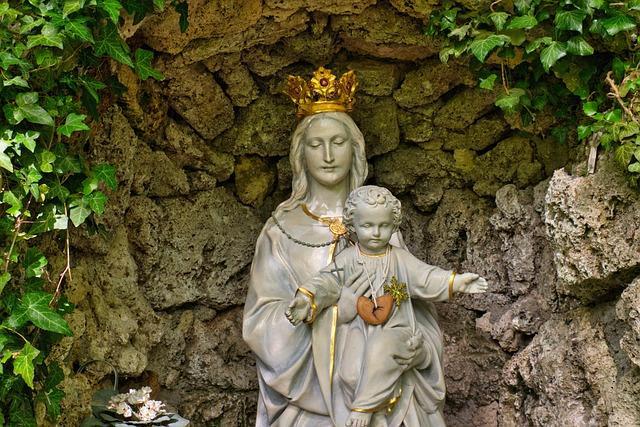
Here’s where things get historically juicy. La Purísima in Nicaragua traces its roots back to Spanish colonial missionaries who arrived in the 16th century, determined to convert indigenous populations. But here’s the plot twist: instead of simply importing Spanish Catholicism wholesale, something magical happened. The devotion to Mary merged with local traditions, creating a uniquely Nicaraguan expression of faith.
By the late 1700s and early 1800s, cities like León and Granada had developed their own altar-visiting customs. Families would open their homes, inviting neighbors to pray and sing traditional cánticos (hymns) at their Virgin Mary shrines. In exchange? Hosts would shower visitors with homemade sweets, traditional foods, and small gifts, a practice called la gorra.
But here’s an incredible historical fact most people don’t know: in the 19th century, as Nicaragua fought for independence and national identity, the Immaculate Conception became a powerful political and cultural symbol. December 8th was declared a national holiday, and La Purísima in Nicaragua evolved from a religious observance into a statement of national pride. The celebration survived dictatorships, revolutions, and economic hardships, proving that some traditions are literally bulletproof.
Let’s talk about what makes the La Purísima Nicaragua festival an absolute must-experience event. First, those altars. Nicaraguan families start preparing weeks in advance, competing (in the friendliest way possible) to create the most stunning display. We’re talking hand-cut paper chains, palm fronds arranged like peacock feathers, mountains of sugar cane, and centerpieces featuring the Virgin Mary that range from traditional statues to modern artistic interpretations.
The music will hijack your soul. Traditional hymns like “Tu Gloria, Tu Gloria,” “Por Eso el Cristiano,” and “Adiós, Reina del Cielo” fill the air, performed by groups of neighbors who’ve been practicing together for months. After each song, the magic happens: hosts distribute la gorra, bags bursting with cajetas (milk-based sweets), rosquillas (corn cookies), gofio (toasted corn powder mixed with sugar), fresh fruits, and sometimes even toys for children.
And the food? Oh, the food. During the La Purísima Nicaragua festival, you’ll encounter chicha de maíz (a fermented corn drink), atolillo (a sweet corn beverage), ayote en miel (candied squash), and nacatamales (Nicaraguan tamales that make their Mexican cousins jealous).
Every household has secret family recipes passed down through generations.
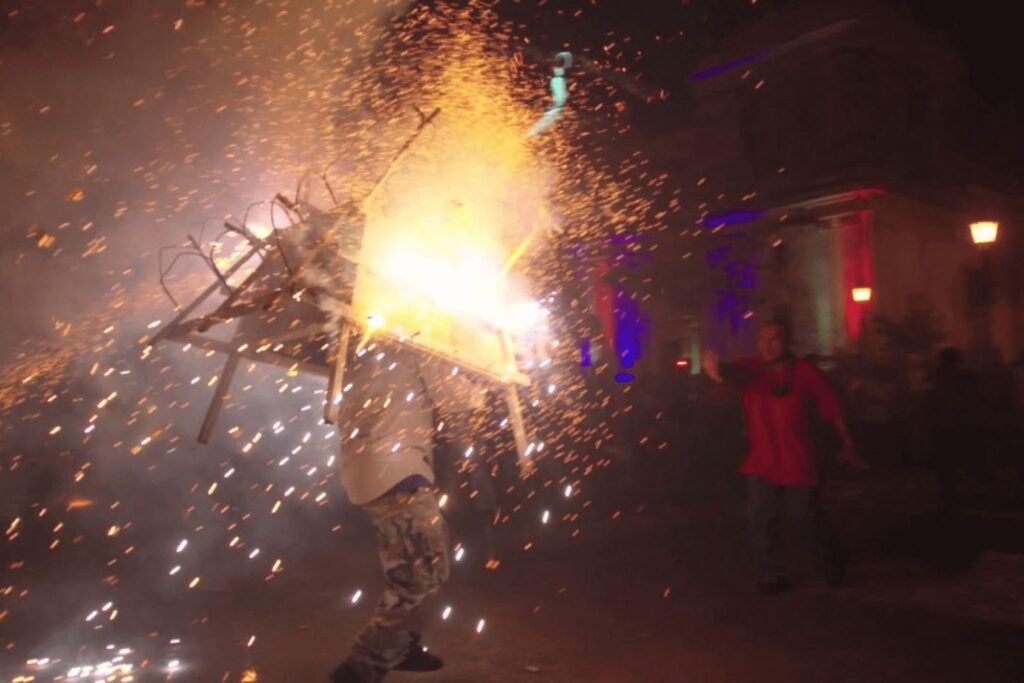
Then come the fireworks. In cities like León and Managua, the night sky on December 7th looks like a war zone,except everyone’s smiling. We’re talking continuous explosions of color and sound that would make Fourth of July celebrations in the US look like a handful of sparklers.
Timing is everything. The La Purísima in Nicaragua celebration officially runs from late November through December 8th, but mark your calendar for December 7th, that’s when La Gritería transforms the country into one massive, joyful party.
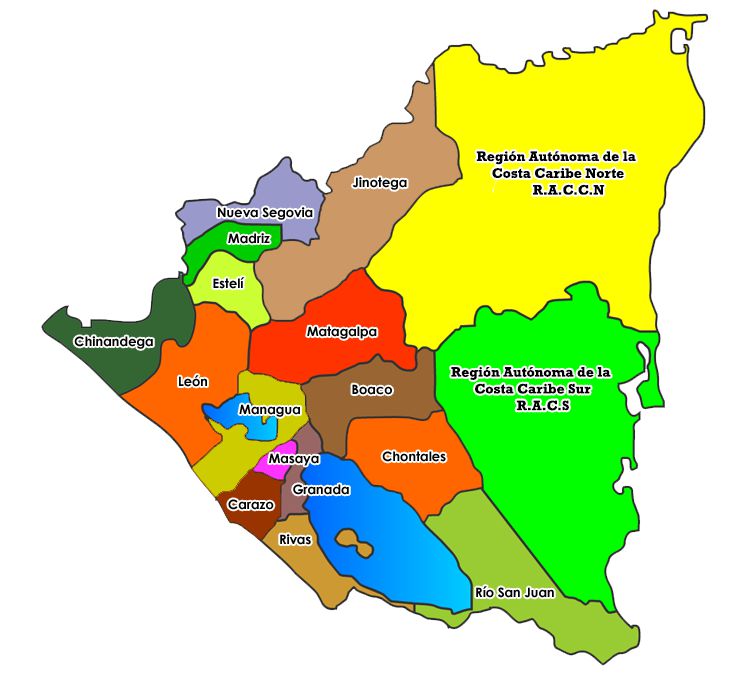
León: The undisputed capital of La Purísima in Nicaragua. This colonial gem goes absolutely bonkers, with nearly every street hosting multiple altars. The León cathedral area becomes ground zero for the celebration, with thousands gathering for processions and communal singing. The city’s artistic heritage means altars here often feature stunning handcrafted decorations you won’t see elsewhere.
Granada: Nicaragua’s photogenic colonial jewel adds its own elegant twist. Altars near the iconic yellow cathedral and along Calle La Calzada become Instagram-worthy masterpieces, blending centuries-old architecture with floral explosions of devotion.
Managua: The capital brings urban energy to the La Purísima Nicaragua festival. Neighborhoods like Bolonia and Santo Domingo host massive celebrations, while the lakefront becomes a gathering spot for families. The sheer scale here is staggering, imagine thousands of altars across a sprawling city, each one its own mini-festival.
But here’s an insider secret: smaller towns throughout western Nicaragua often deliver the most authentic experiences. Places like Masaya, Diriamba, and Estelí celebrate with equal passion but less tourist crowds, giving you an intimate window into how Nicaraguans genuinely observe this tradition.

What makes La Purísima in Nicaragua truly special isn’t just the spectacle, it’s the underlying philosophy of generosity and community that’ll restore your faith in humanity. In a world increasingly defined by transactions, here’s a celebration built entirely on giving without expecting anything in return.
Doña Mercedes, a grandmother from León who’s hosted an altar for 47 consecutive years, explained it best: “We spend months preparing, we spend our savings on decorations and gifts, and we throw open our doors to strangers and friends alike. Why? Because Mary gave us everything by giving us Jesus. This is our small way of saying thank you for giving to others.”
That’s the spiritual core of La Purísima in Nicaragua, a living, breathing example of what Catholic social teaching calls “preferential option for generosity.” Wealthy families and struggling households alike participate with equal enthusiasm. The banker and the street vendor both open their homes, both sing the same hymns, both share what they have.
I’ve witnessed children saving their small allowances for months to buy gifts for their family’s altar. I’ve seen teenage gangs that normally wouldn’t speak to each other singing side-by-side at neighborhood altars. I’ve watched tears stream down the faces of hardened adults when the crowd reaches the emotional climax of “Adiós, Reina del Cielo.”
This is what La Purísima in Nicaragua accomplishes: it temporarily dissolves the boundaries between rich and poor, young and old, believer and skeptic. For one night, Nicaragua becomes the country it aspires to be, united, generous, and joyful.
Let’s geek out on some mind-blowing historical details about La Purísima in Nicaragua:
Ready to dive in? Here’s everything you need to know to experience La Purísima in Nicaragua like a well-prepared insider (not a clueless tourist taking flash photos during prayers):
When to Arrive: Get to Nicaragua by December 5th at the latest. This gives you time to settle in, scout out the best altar neighborhoods, and soak up the anticipation building throughout the country.
What to Wear: Modesty matters here. Skip the tank tops and short shorts. Comfortable walking shoes are non-negotiable, you’ll be on your feet for hours, moving from altar to altar. December in Nicaragua is pleasantly warm (70s-80s°F) but can get humid, so breathable fabrics are your friend.
Safety Notes: La Purísima in Nicaragua is generally very safe,the communal spirit creates natural neighborhood watch situations. However, standard travel precautions apply: watch your belongings in crowds, stick with groups when possible, and let someone know your plans.
Here’s the honest truth: you can stumble through La Purísima in Nicaragua on your own and have a decent time. Or you can partner with experts who’ll turn decent into absolutely unforgettable.
Macua Tours specializes in connecting travelers with authentic Nicaraguan experiences, and the La Purísima Nicaragua festival is their absolute wheelhouse. Their local guides don’t just know which neighborhoods have the best altars, they know the families hosting them, the stories behind the decorations, and which grandmother makes the most incredible cajetas in León.
Want to understand the historical significance of La Purísima in Nicaragua while you’re experiencing it? Macua Tours provides context that transforms observation into genuine understanding. You’ll learn why certain hymns make old women cry, what the symbolic meanings are behind altar decorations, and how this celebration has evolved through Nicaragua’s turbulent history.
They handle the logistics that trip up independent travelers: safe transportation between celebration hotspots, accommodation in the heart of the action, translation services, and insider access to private altars not typically open to the general public. Plus, they build in cultural sensitivity training so you participate respectfully rather than acting like a spiritual tourist.
Smart travelers use La Purísima in Nicaragua as an anchor for a broader Nicaraguan exploration, and Macua Tours excels at crafting comprehensive itineraries. December is actually perfect for visiting Nicaragua,the rainy season has ended, temperatures are comfortable, and the post-Purísima period offers unique opportunities.
Macua Tours builds seamless multi-day experiences that showcase Nicaragua’s incredible diversity, not just the religious heritage of La Purísima in Nicaragua, but also the natural wonders, adventure opportunities, and culinary traditions that make this country Central America’s best-kept secret.
I’ve covered festivals across six continents, from Rio’s Carnival to India’s Holi, from Munich’s Oktoberfest to Thailand’s Songkran. And I’ll tell you this: La Purísima in Nicaragua holds its own against any celebration on Earth.
What sets it apart? The genuine warmth. The spiritual authenticity combined with pure, unfiltered joy. The fact that participation matters more than observation. The intoxicating blend of devotion and party, tradition and spontaneity, solemnity and fireworks.
La Purísima in Nicaragua isn’t performed for tourists, it’s lived by Nicaraguans. You’re not watching a show; you’re being invited into something sacred and communal and utterly human. That invitation, that radical hospitality, that willingness to share the most treasured aspects of their culture with strangers? That’s what makes Nicaragua special.
So here’s my challenge: Stop reading. Start planning. Contact Macua Tours. Book your December trip. Show up in León or Granada with an open mind and comfortable shoes. Accept the gifts. Sing the hymns (even if you mangle the Spanish). Let the fireworks rattle your bones and the generosity soften your heart.
Experience La Purísima in Nicaragua for yourself, and you’ll understand why this celebration has survived centuries of upheaval. You’ll see why Nicaraguans living abroad weep when they talk about missing La Gritería. You’ll discover what happens when faith, culture, and community collide in the most beautiful way possible.
The Virgin Mary awaits. Nicaragua awaits. Your transformation awaits.

Specializing in authentic Nicaraguan cultural experiences, Macua Tours connects travelers with the heart and soul of Nicaragua. From the explosive celebrations of La Purísima to off-the-beaten-path adventures, their expert local guides ensure you experience Nicaragua as it’s meant to be, fully, deeply, and unforgettably. Visit macuatours.com to start planning your journey.
Written by: Bosco Talavera – Intur Certified National Tour Guide