At first glance, “Granada vs. Masaya” sounds like a comparison between two cities receiving equal time. This Nicaragua day trip from Guanacaste is structured differently.
Granada is the city the tour explores in depth. The Granada portion usually receives about 3.5 hours, including lunch, the colonial center, the horse-drawn carriage tour, and the Isletas boat tour. In the Masaya area, the itinerary includes two focused attraction stops: the Mirador de Catarina and Masaya Volcano. Guests typically spend about 30 minutes at Catarina and around 10 minutes at the Santiago crater viewpoint itself, excluding driving and access time inside the park.
The urban center of Masaya city is not part of this itinerary. The two areas are not competing for the same hours because they serve different purposes within the route.
Macua Tours operates the day with a flexible sequence. The itinerary is designed to include the Mirador de Catarina, Masaya Volcano, Granada’s colonial center, and the Isletas boat tour, but the order and duration of some stops may change according to the season, official volcanic monitoring, park access, border timing, and the pace of the group. The Isletas remain the closing highlight before the return to Peñas Blancas.
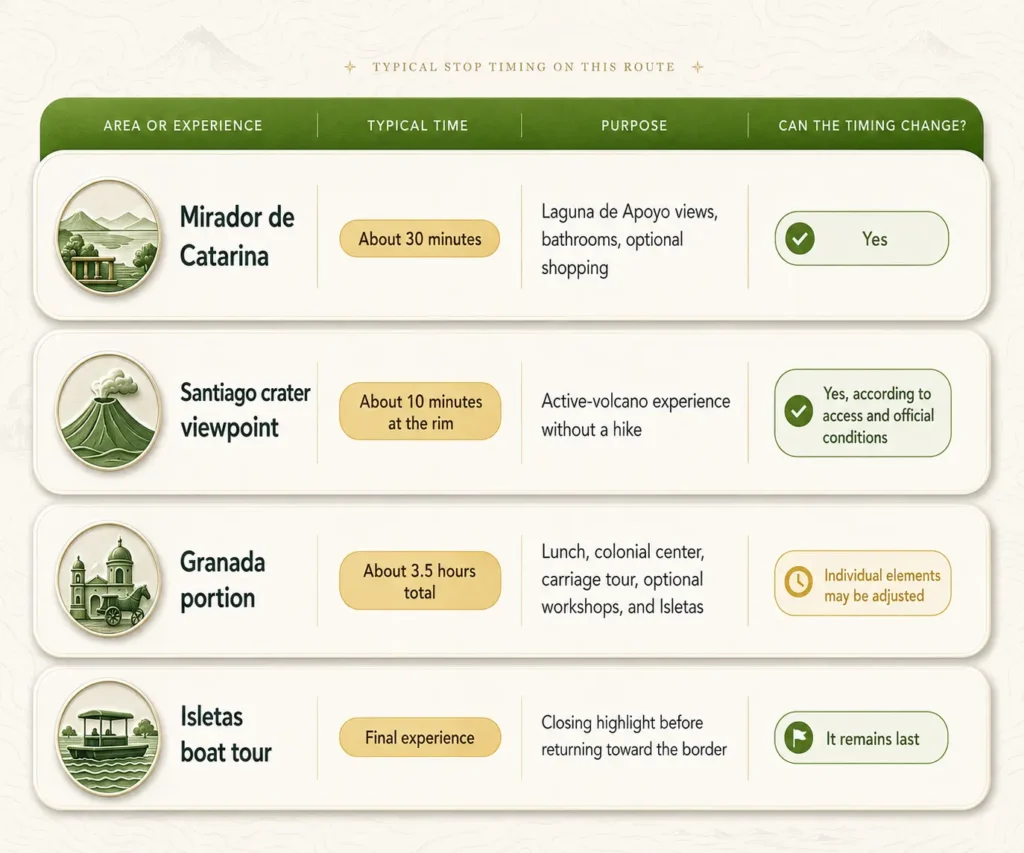
These times describe how the day commonly operates. They are not a rigid minute-by-minute guarantee. The guide adjusts the route when necessary while protecting the core experiences and the return schedule.
The Mirador de Catarina overlooks Laguna de Apoyo from the crater rim. The vehicle brings the group directly to the viewpoint, so no hike is required. On a clear day, guests can see the volcanic lake below and Mombacho in the direction of Granada.
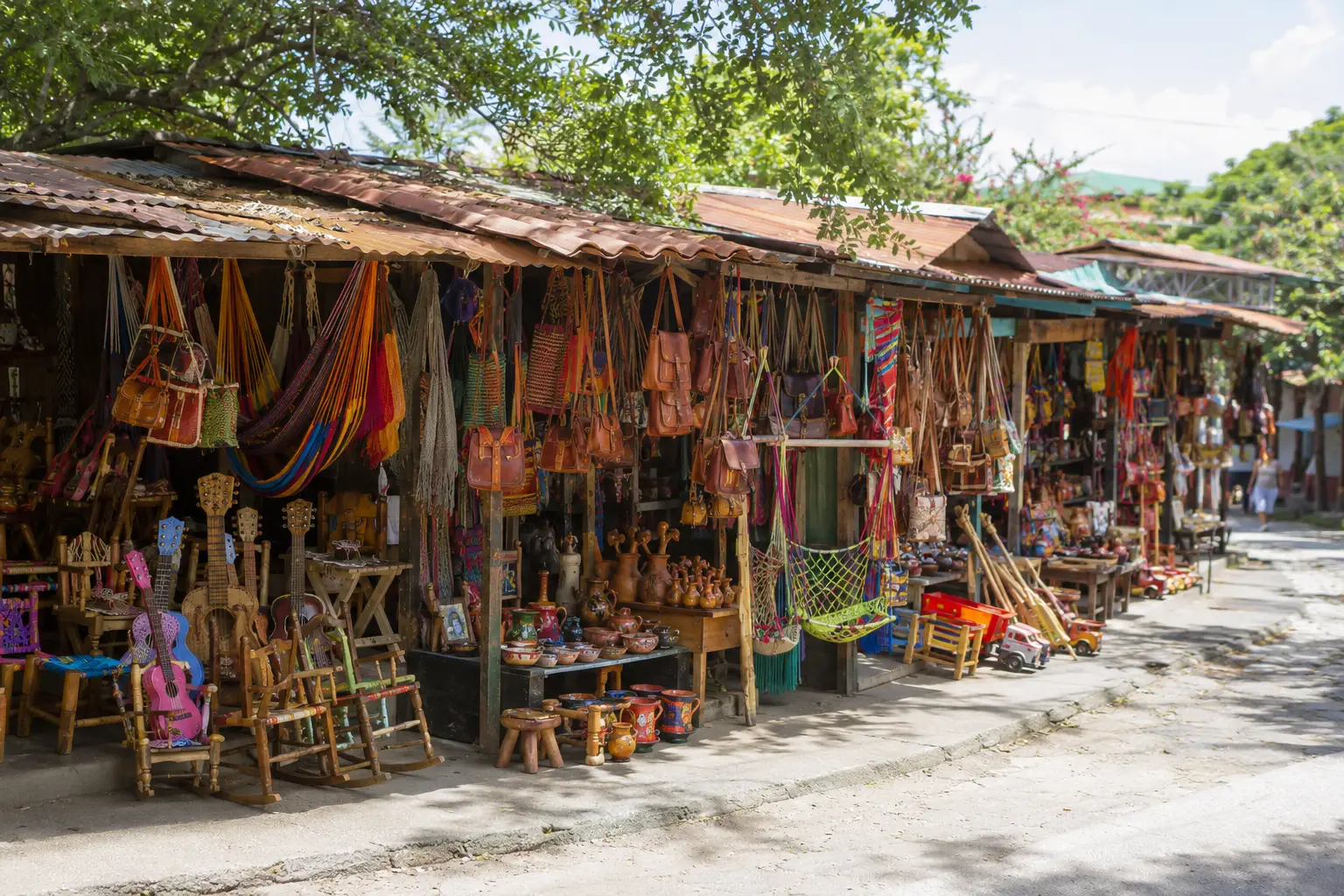
Artisan shops and local vendors surround the viewpoint. Artisans from nearby communities, including Indigenous communities, may also sell their work there. This allows guests to combine the landscape, access to bathrooms, and optional souvenir shopping in one stop.
The usual window is about 30 minutes. That is enough time to enjoy the view, browse briefly, and use the facilities before continuing.
Many guests add Nicaragua to a Costa Rica vacation only after arriving in Guanacaste, sometimes deciding to book the day before departure. They may want to buy a few locally made pieces, but they did not plan the trip around an extended shopping session. Catarina works well for that profile because it offers scenery and shopping without requiring a separate, lengthy market visit.
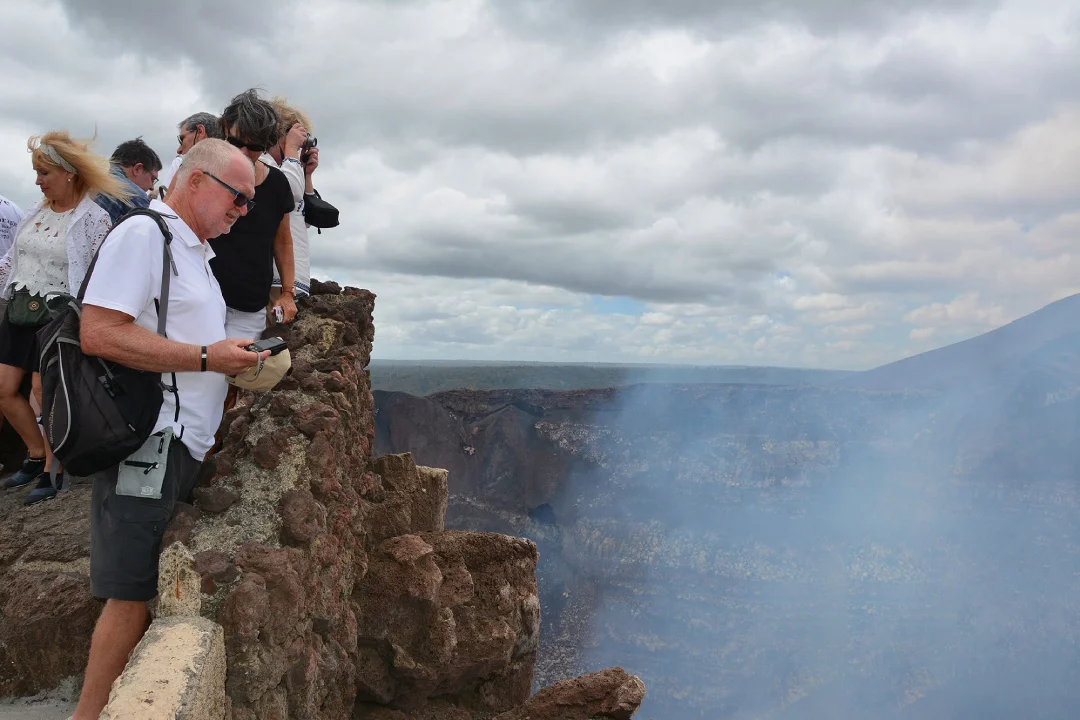
Access to the Santiago crater may be restricted or suspended with little notice when volcanic conditions change. INETER volcanic monitoring, tracks volcanic activity in Nicaragua, while park authorities may adjust access according to official advisories and current conditions.
During periods of closer monitoring, I may schedule Masaya Volcano earlier in the route. The reason is operational.
Reaching the crater earlier reduces the risk of losing the experience if access conditions change while the group is already in Granada. If the group visits in the morning and access is restricted later, the stop has already been completed. If the volcano is left until later in the day, a change in conditions may remove it from the itinerary.
This is not a fixed rule for every departure. The route can change according to the season and the conditions reported for that day. The principle is consistent: protect the stop most vulnerable to an official closure before committing the group to the longer Granada portion.
The vehicle travels directly to the Santiago crater viewpoint, so guests do not need to complete a trail or mountain hike. Park personnel normally limit the time at the rim to about 10 minutes because volcanic gases can irritate the eyes and respiratory system.
Ten minutes sounds short on paper. At the edge of an active crater, it is a concentrated experience. The purpose is to reach the Santiago crater safely, understand what guests are seeing, and continue before the exposure or schedule becomes counterproductive.
The group normally arrives in Granada ready to eat. Guests have been traveling since early morning and need a proper meal before continuing through the city and ending the day on the lake. Lunch is not wasted sightseeing time. It is the reset that makes the afternoon enjoyable.
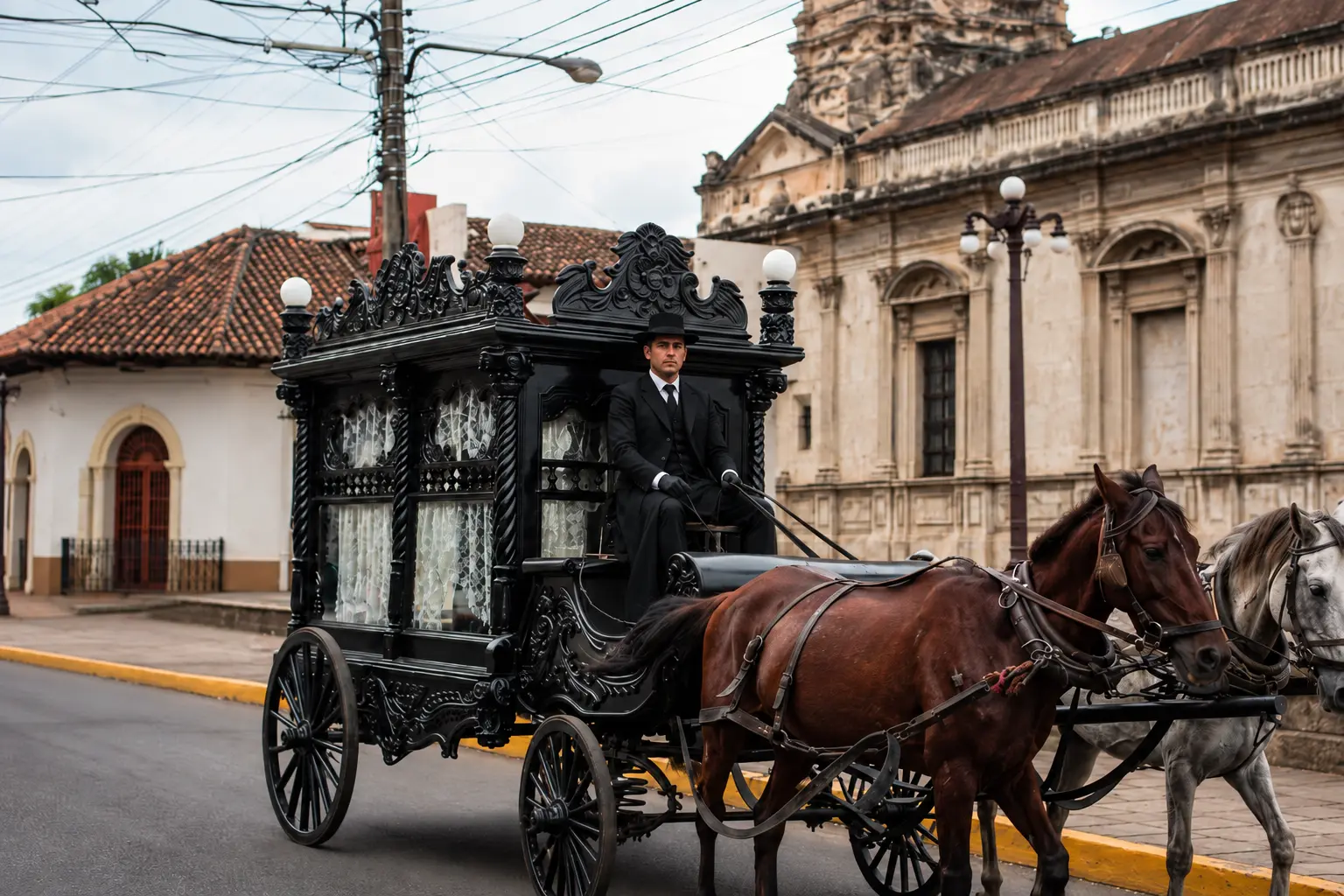
After lunch, the horse-drawn carriage tour moves through Granada’s colonial streets. From the carriage, guests can take in the scale of the facades, the colors of the buildings, the street layout, and the rhythm of the historic center before exploring more closely.
Parque Central, the cathedral, and Calle La Calzada are not isolated attractions that need to be checked off one by one. Together, they show how Granada works as a living colonial city. The carriage gives guests an overview, while the stops on foot allow the guide to add context where the group shows the most interest.
The top activities in Nicaragua for a one-day trip guide provides additional context on the experiences that can fit into a same-day itinerary from Guanacaste.
Granada then closes on the water. The Isletas boat tour navigates among the islands of Lake Nicaragua with Mombacho rising behind the landscape. Nicaragua’s official National Tourism Map identifies the Isletas as one of Granada’s defining attractions and a setting for boat trips and nature observation. Municipality of Granada and the Isletas
When the boat returns to the dock, the group begins the journey toward Peñas Blancas. The Isletas are always the final experience in Nicaragua. That part of the sequence does not change.
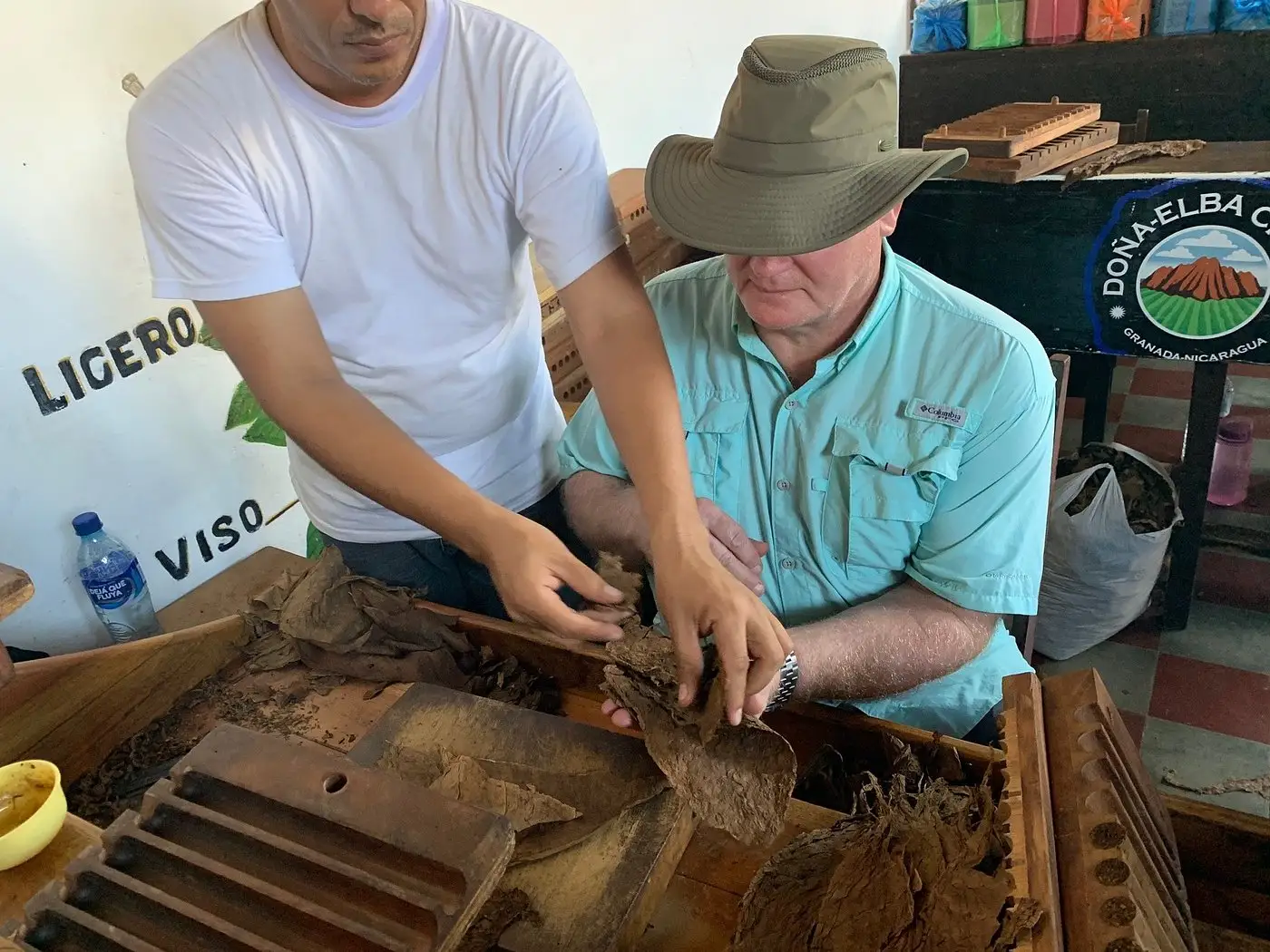
The core Granada experience includes lunch, the colonial center, the carriage tour whenever timing allows, and the Isletas as the fixed closing highlight.Two additional stops may enter the itinerary according to the interests of the group and the time available.
Bate que Bate is a working chocolate workshop in Granada’s colonial center. Guests interested in cacao and chocolate production may include it when the pace of the day allows.
A cigar workshop follows the same principle. Some guests want to observe the rolling process or purchase directly from the workshop. Others have no interest in adding that experience.
Neither stop is automatic. When delays reduce the Granada window, shopping time is compressed first. If more time must be recovered, Bate que Bate or the cigar workshop may be removed next. This protects the experiences that define the afternoon rather than forcing every possible stop into a schedule that no longer supports them.
Some of the best moments in Granada occur between the fixed points: a question about a building, a conversation with a vendor, or a few minutes in the shade at Parque Central. A well-managed day does not need to be continuously programmed to feel complete.
Cross-border tours contain variables that do not exist on a city tour that begins and ends in the same place. A slower border crossing, additional time at breakfast, traffic on the Rivas road, or a delay at the volcano entrance can reduce the available window in Granada.
When that happens, I do not cut randomly.
Shopping time is compressed first. Guests can browse at Catarina and at several points in Granada, so reducing shopping time changes the depth of browsing without removing the opportunity completely.
Optional workshops may be removed next. Bate que Bate and the cigar workshop are included only when the group wants them and the schedule can support them.
Lunch is protected. The group still has the Granada activities, the Isletas, the border crossing, and the drive back to the hotel ahead. Skipping a proper meal is not a sensible way to recover time.
The carriage tour is protected whenever timing allows. It gives guests a practical introduction to Granada before they continue through the colonial center more closely.
The Isletas are always protected. The boat tour is the closing highlight of the Nicaragua portion of the day and the final experience before the group begins the return toward Peñas Blancas.
This hierarchy allows the itinerary to remain flexible without becoming vague. The exact order may change, but the guide still knows which elements can be shortened, which can be removed, and which define the product guests booked.
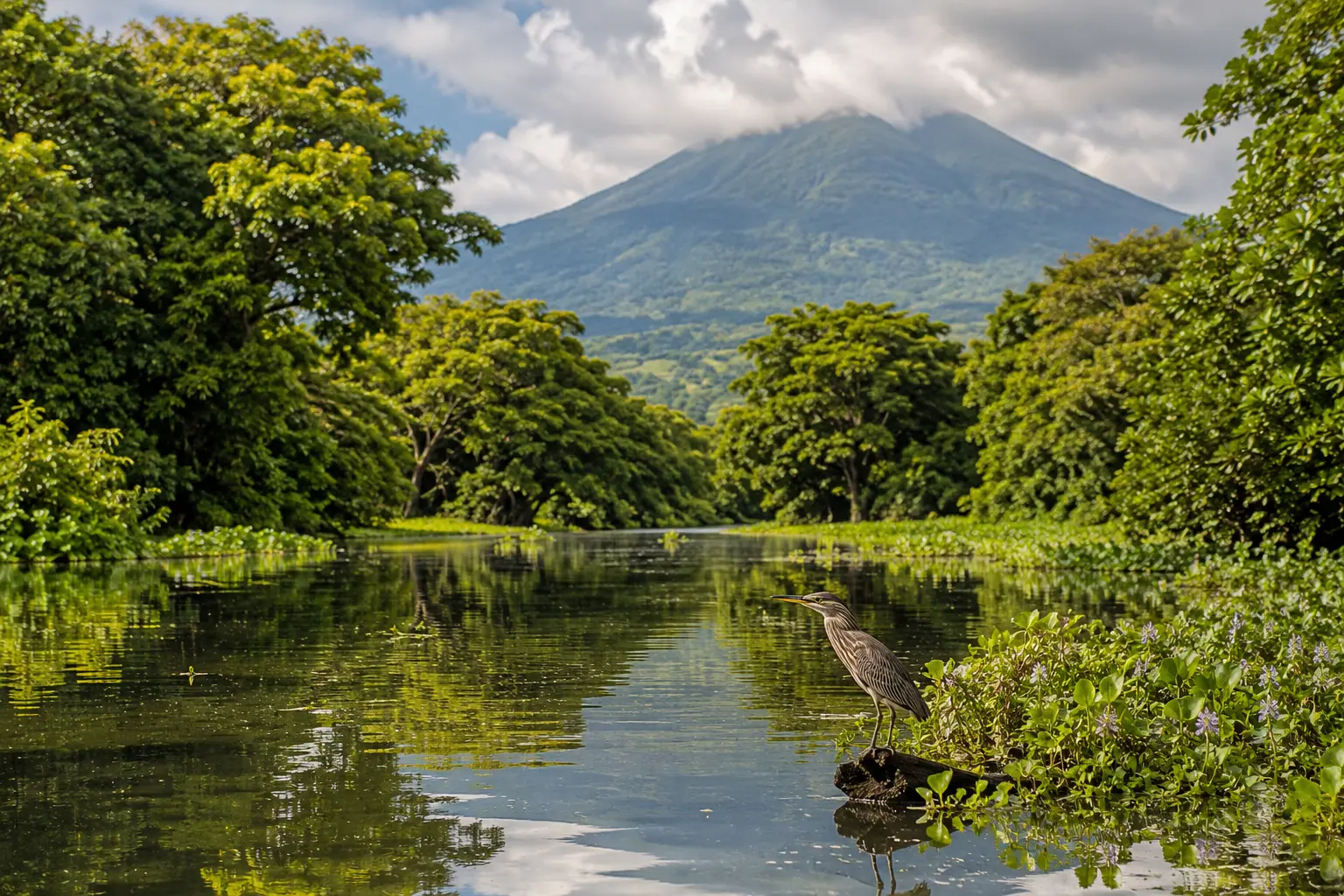
The tour visits the Masaya area, not the urban center of Masaya city. The two focused stops are the Mirador de Catarina and Masaya Volcano.
The Granada portion usually receives about 3.5 hours in total, including lunch, the colonial experience, and the Isletas boat tour. Guests usually spend about 30 minutes at Catarina and around 10 minutes at the Santiago crater viewpoint itself. Driving, park access, and waiting time are separate from those on-site estimates.
Yes. The guide may adjust the sequence according to the season, volcanic monitoring, park access, border timing, and the pace of the group. The Isletas boat tour remains the final experience before returning toward Peñas Blancas.
No. It is the fixed closing highlight of the Nicaragua portion of the day and is always scheduled last.
The useful question is not whether Granada or Masaya “wins.” These areas are not competing for identical hours.
The Masaya area contributes two focused stops: Catarina for the landscape, facilities, and optional shopping, and Masaya Volcano for a brief active-crater experience. Granada carries the longer city portion, provides the meal and colonial context, and closes the day on Lake Nicaragua.
The sequence described here reflects how our guides commonly organize the route under current operating conditions. Seasonal factors, official volcanic monitoring, park access, border timing, and the pace of the group may require adjustments while the guide protects the core experiences and the return schedule.
The Nicaragua day trip from Guanacaste page covers the full service and logistics from hotel pickup to the return crossing. The Nicaragua day trip itinerary explains the complete route in sequence.
Ready to see how this experience can work from your Guanacaste hotel?
Request Your Nicaragua Day Trip Here.
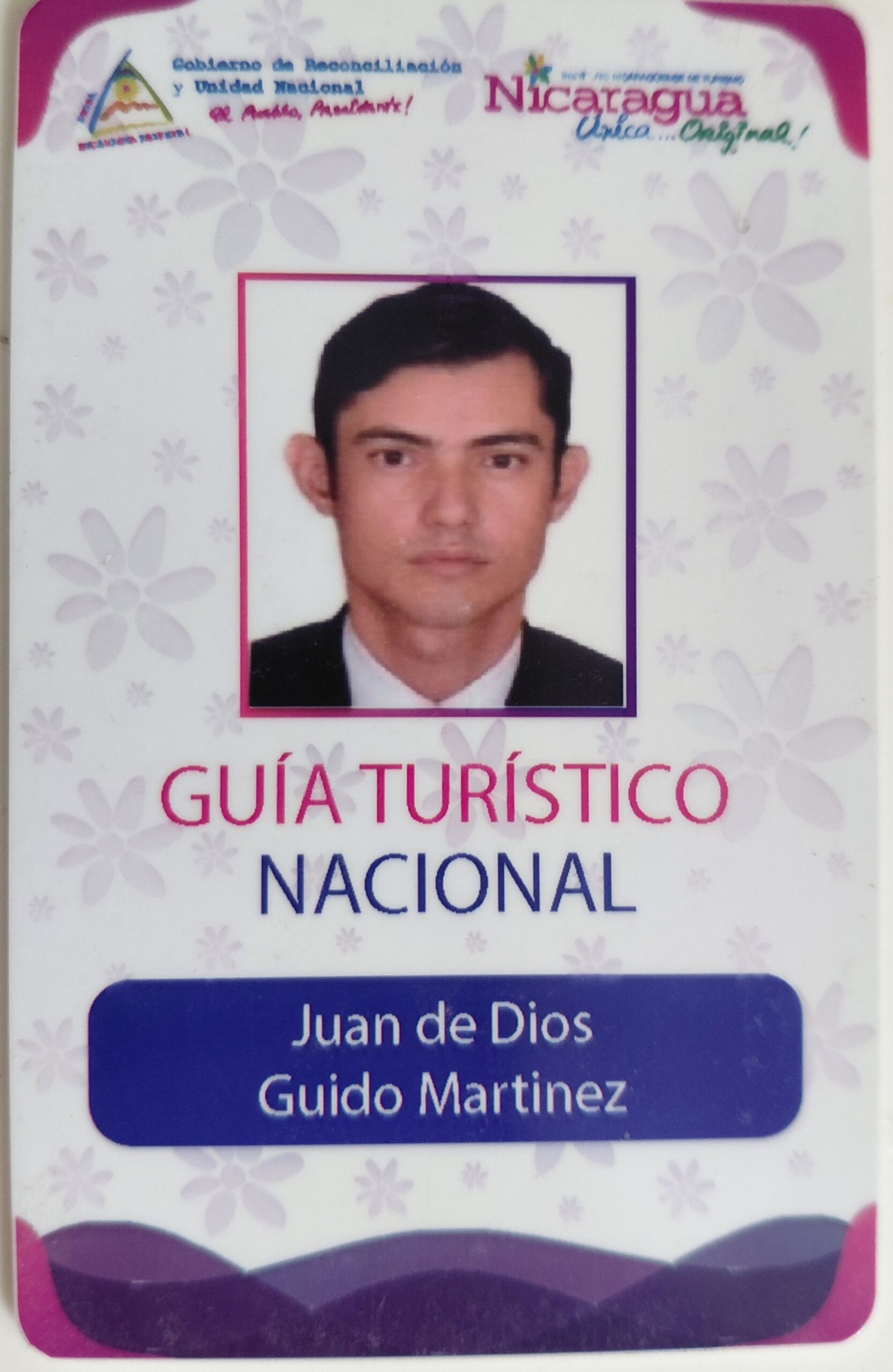
Juan Guido Martinez is a Nicaraguan national tour guide who holds an official guide credential issued by INTUR. He has firsthand experience guiding visitors through Granada, Mirador de Catarina, Masaya Volcano, and the Isletas de Granada.
His knowledge of this route goes beyond describing attractions. It includes managing border timing, park access, volcanic conditions, group pace, and the practical decisions required to protect the most important experiences during a same-day trip from Guanacaste.
This article reflects how the itinerary is actually organized in the field, including why Granada receives most of the day, why Masaya Volcano may be scheduled earlier, and why the Isletas remain the final experience before returning toward Peñas Blancas.