
The question comes up before almost every booking. Guests ask me whether January is better than July, or whether the rainy season actually ruins the day. My answer is always the same: it depends on what you want to protect.
Figuring out the best time for a Nicaragua day trip is not just about weather. It involves the quality of views at specific stops, the heat on the border walk, how full the Masaya market will be, and whether the morning sky over Apoyo Lagoon is clear or wrapped in cloud. Each month carries a different trade-off.
Quick answer: The best months for a Nicaragua day trip from Guanacaste are November, early December, January, and February. These months offer the most consistent combination of clear morning views, moderate heat, and manageable travel conditions. May and mid-July can also work well if you want fewer crowds and are comfortable checking the forecast before booking.
For travelers who already know they want the full route, stop sequence, inclusions, and booking details, see our private Nicaragua day trip from Guanacaste.
This guide runs through Nicaragua’s climate calendar month by month, explains how each season affects a same-day excursion from Guanacaste, and gives you a clear framework based on what matters most to you.
For the route itself, including stop sequence, drive times, and timing decisions, see: What Are the Best Nicaragua Day-Trip Itineraries from Guanacaste?
Nicaragua runs on two distinct seasons. The dry season, called verano locally, runs roughly from late November through April. The rainy season, invierno, covers May through early November. These are the broad strokes. Within each season, the experience shifts by month in ways that matter for a same-day trip.
Dry season (late November through April): Roads are in better condition, morning skies are clear, and the view from the Catarina mirador over Apoyo Lagoon is at its sharpest. Granada’s streets are dusty and sun-drenched by mid-afternoon. December through February brings a welcome coolness, especially in the mornings. March and April push into genuine heat, with temperatures in the Pacific lowlands regularly hitting 35°C or above. This is also the windiest stretch: the Papagayo trade winds blow hard across the Gulf of Papagayo, which affects the drive from northern Guanacaste resorts more than most travelers expect. If you are staying near Liberia or the Papagayo Peninsula, January and February mornings can be gusty on the highway. The wind drops off toward the Nicaraguan side of the border.
Rainy season (May through early November): Morning skies are often clear or partly cloudy. Rain tends to arrive in the afternoon, with the heavier stretches typically coming later in the day, though timing can shift depending on the weather system. A day trip that crosses the border before 8 AM and wraps up in Nicaragua by 4 PM often avoids the heaviest rain entirely. The countryside is green and sharp-edged, humidity is higher, and the heat is slightly more manageable than March or April. The main drawbacks are reduced crater views on overcast mornings and occasional unpredictability when cloud systems arrive earlier than expected.
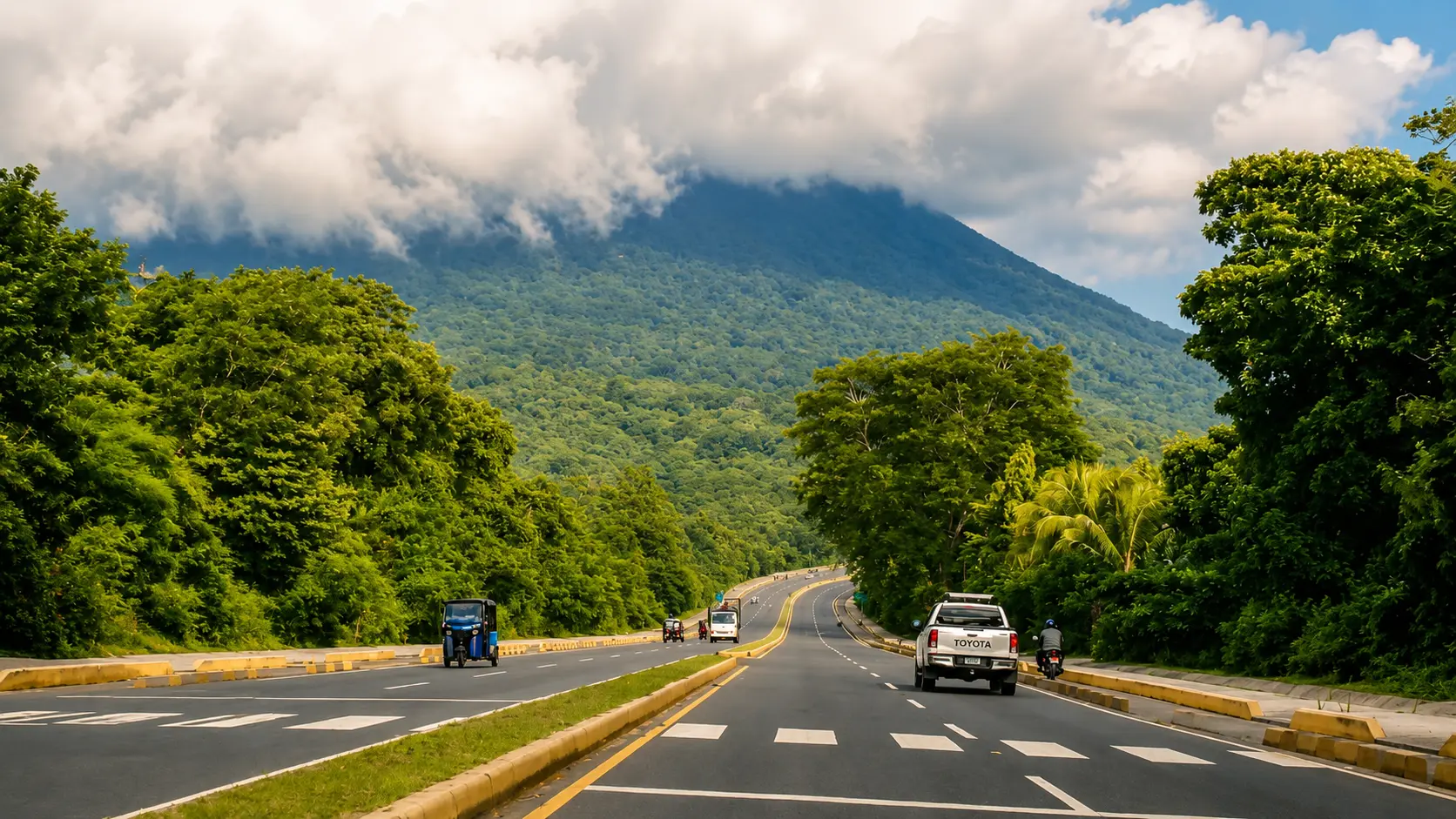
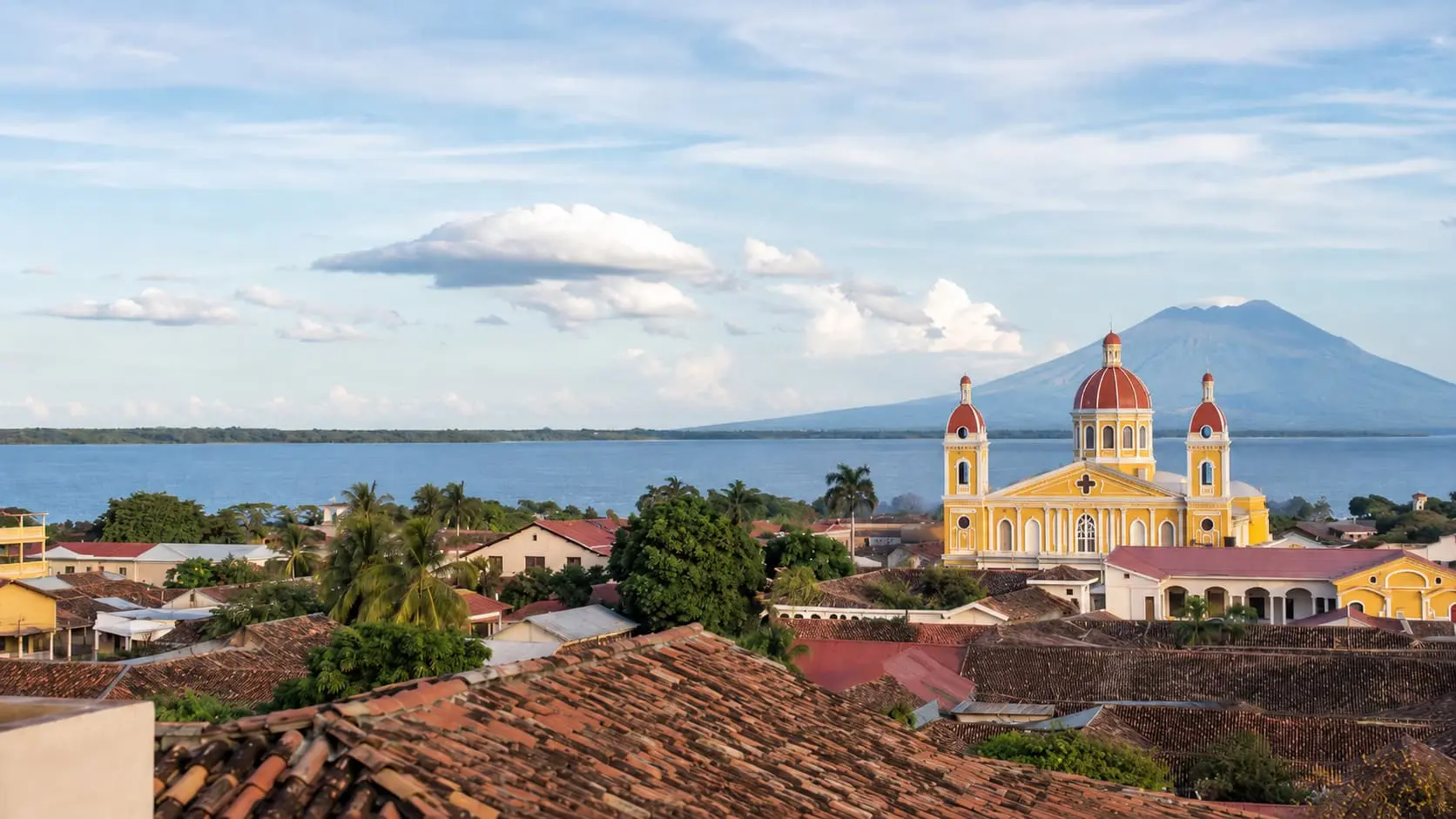
November: The season transitions back toward dry. By mid-November, mornings are frequently clear again. The terrain retains some of the green sharpness from the rains, which makes for strong photography. Border traffic is low. This is one of the best months for this trip and is consistently overlooked. Early December gets more attention, but November can deliver dry-season clarity with rainy-season quiet.
December: One of the most comfortable months for this trip. Temperatures are mild, skies are clear, and the holiday atmosphere in Granada is genuine. Border volume picks up sharply in the final week of December. If you travel after Christmas, plan for a longer crossing window. Early December is often the best-value month of the year for this route.
January: Clear, cool mornings. Papagayo winds are strong, which can make the drive from northern Guanacaste feel exposed, particularly on routes with little tree cover near the coast. This does not affect the day inside Nicaragua. Border volume is manageable. January is a consistent performer for views and comfort.
February: Similar to January in most respects. Strong wind on the Costa Rica side, clear and pleasant in Nicaragua. February is high season for Guanacaste travel, so private day-trip availability can tighten. Booking ahead is safer if your dates are fixed.
March: Heat increases noticeably. Daytime temperatures inside Nicaragua often reach 36 to 38°C in the Masaya and Granada corridor. Morning hours remain pleasant, but by midday the heat on Granada’s colonial streets is significant. Semana Santa falls in March or April and is one of the busiest travel periods at the Peñas Blancas border. If your trip falls in that window, we usually recommend allowing 60 to 90 extra minutes for the crossing.
April: Similar heat to March, and the most demanding month for physical comfort. Crater and mirador views remain sharp and clear. The Masaya Artisan Market is open and well-stocked. The weeks immediately before and after Easter often have lighter border volume than late December or mid-July.
May: The rainy season begins, typically with light and intermittent showers in the first two weeks. Morning clarity is still good. Crowds thin out noticeably. This is a quiet month for tourists at most destinations inside Nicaragua, which means shorter queues at popular stops and a more relaxed pace at lunch. The terrain starts greening.
July: The veranillo del buey (roughly translated as the midsummer dry spell) brings a natural break in the rains, usually in the second and third weeks of July. Skies clear up, views sharpen, and the heat is moderate compared to March or April. Border crossings are quieter than December or Easter. This is one of the most underused booking windows in the calendar for this route. The main drawback is variability: the veranillo is not guaranteed every year and its timing shifts from one July to the next.
June: Patterns become more variable. The Caribbean moisture pushes into the Pacific corridor. Some mornings are partly cloudy at Catarina, which affects the caldera view. Afternoon rain is more reliable. June carries more uncertainty than November or January for those who prioritize clear morning views.
August through September: The wettest stretch of the year. Morning clouds are common at Catarina. Afternoon showers arrive earlier and heavier. The boat tour on Las Isletas can get wet on the return if you run late. These months do not make a day trip impossible, but they require tighter timing: finish the boat tour before 2 PM and get into Granada’s covered arcades or a restaurant before the rain arrives. Crowds are minimal.
October: Similar conditions to August and September, with the added variable of Atlantic hurricane systems occasionally pushing moisture into the Pacific side. October has the least predictable mornings of any month. There are October days with perfect skies, but this is not a month to plan around if you have fixed dates. If you are flexible and can check a 48-hour forecast before confirming, October becomes less of a gamble.
Weather does not affect all stops equally. Here is where it makes the most practical difference:
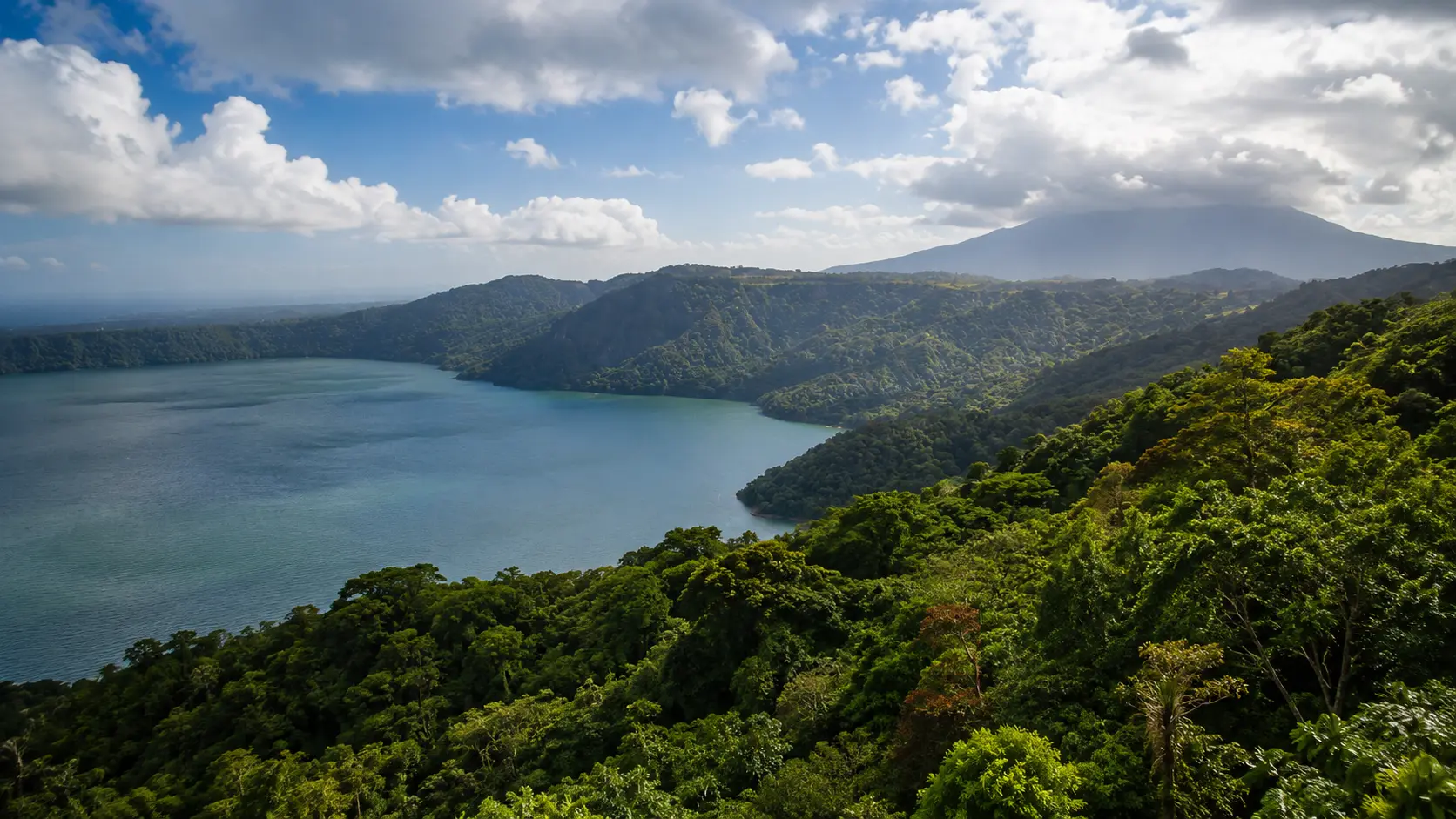
Catarina mirador: The caldera view is the most weather-sensitive stop on the route. In dry months, visibility is sharp enough to see Granada’s church towers and Mombacho Volcano from the rim. In the rainy season, morning cloud frequently fills the caldera and reduces the view. This is the stop where season makes the biggest practical difference to what you actually see.
Masaya Volcano: Sulfuric fumes rise year-round. Rainy-season humidity can make the experience more intense; the fumes feel stronger in moist air. Dry-season visits have the clearest air for viewing into the crater. Masaya Volcano National Park generally operates year-round, but access can change with little notice due to operational decisions, safety conditions, or government-managed closures. Morning visits give the itinerary more flexibility if access changes later in the day.
Las Isletas boat tour: Rain during the tour is uncommon in dry season and intermittent in rainy season. The bigger risk is the return drive if an afternoon storm arrives faster than expected. The window from roughly 10 AM to 1 PM gives the best odds in any season.
Granada walking tour: March and April heat makes midday walking on cobblestones genuinely taxing. November through February is the most comfortable stretch for exploring on foot. Rainy-season afternoons can cut the walk short if you are not under covered arcades by 3 PM.
For more on what each stop involves, see: Top Activities in Nicaragua for a One-Day Adventure from Guanacaste
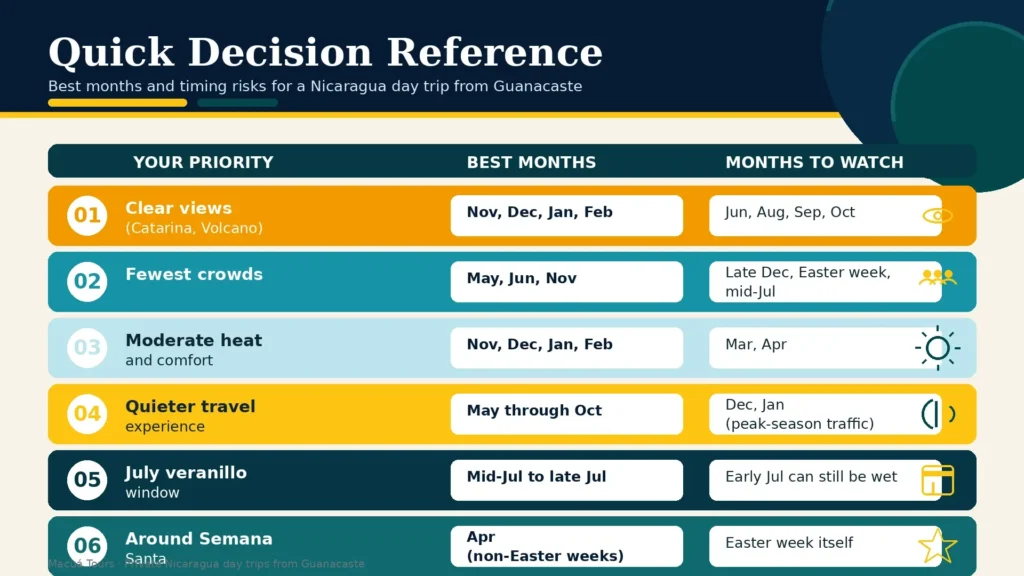
Climate averages for Nicaragua’s Pacific corridor: INETER, Nicaragua Meteorological Institute and Climates to Travel
Most guests who raise this concern picture all-day downpours. That is not what happens in the Nicaragua Pacific corridor during the hours a day trip actually runs.
A typical rainy-season day from a traveler’s perspective: You leave Guanacaste at 4:30 AM under clear or partly cloudy skies. You cross the border between 7 and 8 AM. You move through Rivas, Masaya, and Granada under conditions that range from partly cloudy to overcast but dry. Rain often arrives later in the day, commonly in the afternoon, although timing can shift depending on the weather system. If you finish the boat tour around noon and walk Granada until 4 PM, you will likely encounter some rain toward the end of the day.
The best time for a Nicaragua day trip in terms of avoiding rain entirely is the dry season. But the rainy season is more workable than its reputation suggests, particularly in May, July, and November, where the morning windows are often clean and the afternoons are the only uncertain part.
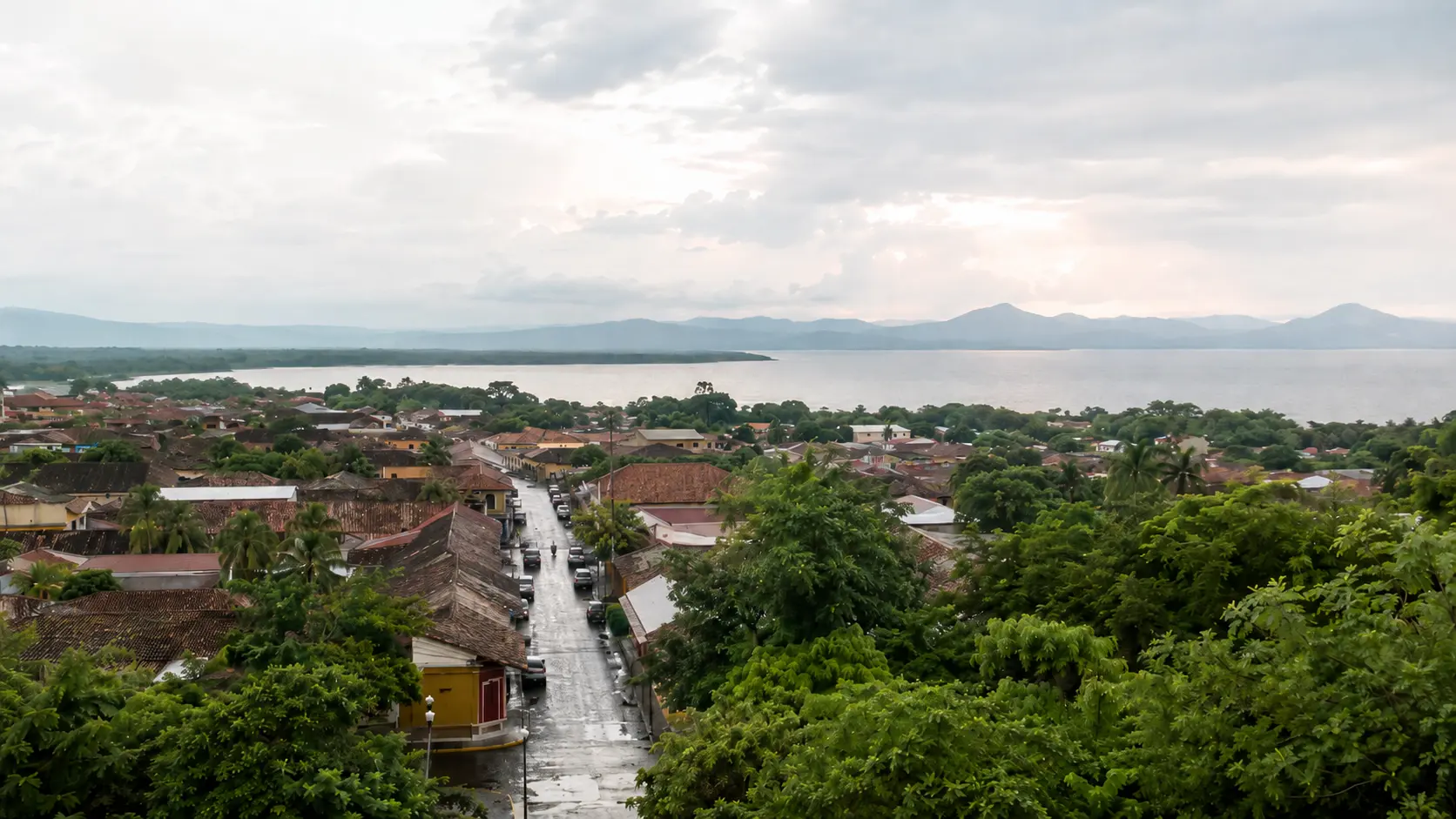
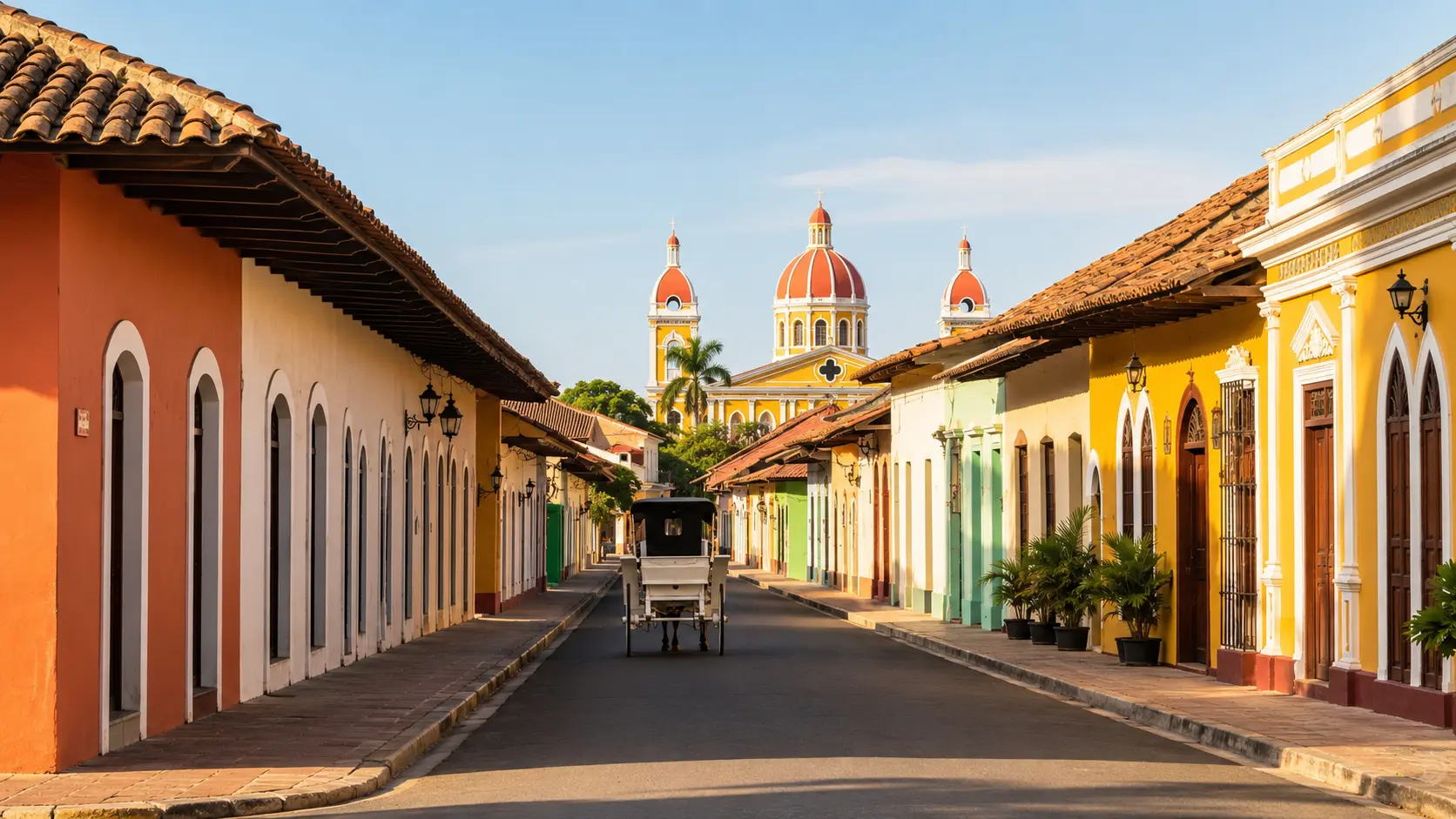
If I had to recommend one month without knowing anything about a traveler’s schedule, I would say November or early December. You get dry-season clarity, moderate temperatures, low border traffic, and fair pricing. January and February are close seconds, with slightly higher demand and stronger Papagayo winds on the Costa Rica side.
If those months are not available, the veranillo in mid-July is a reliable fallback. May is quieter than most people expect and often delivers good mornings.
The months I would flag for caution are Easter week in March or April, the final week of December, and October, each for different reasons.
If you are ready to choose dates, the main booking page for our private Nicaragua day trip from Guanacaste explains the route, inclusions, and next steps: Nicaragua Day Tours from Costa Rica
November through February offers the most consistent combination of clear skies, moderate temperatures, and manageable border traffic. The veranillo in mid-July also performs well for travelers who can verify the forecast 48 hours in advance.
Yes. Rain in the Pacific corridor of Nicaragua tends to arrive in the afternoon, though timing can shift. A day trip that wraps up inside Nicaragua before 4 PM can often avoid the heaviest showers. May, July, and November are the most favorable months for this route during the green season.
Semana Santa is one of the busiest travel periods at the Peñas Blancas border. If your trip falls in that window, we usually recommend allowing 60 to 90 extra minutes for the crossing. The full step-by-step guide is here: How to Cross the Costa Rica-Nicaragua Border Smoothly on a Day Trip
Early December is an excellent time for this trip. The final week of December brings heavy border traffic. If your trip falls between December 26 and January 2, build in at least an extra hour for the crossing.
Masaya Volcano National Park generally operates year-round, but access can change with little notice due to safety conditions, volcanic activity, or government-managed operational decisions. A morning visit gives the itinerary more flexibility if access changes later in the day.
The middle two weeks of July often fall in the veranillo del buey, a natural dry break in the rainy season. During this window, morning skies can be clear, temperatures are moderate, and border crossings are quiet. The timing shifts year to year, so check the forecast before you commit.

Juan Guido is a certified Nicaraguan National Tour Guide who has guided cross-border excursions with Macuá Tours across the Peñas Blancas, Rivas, Masaya, and Granada corridor. His field experience helps travelers understand how season, timing, heat, rain, and border volume affect a same-day trip from Guanacaste.
© 2026 Macua Tours. Registered trade name of Origami Passage Holdings LLC, a Wyoming limited liability company organized in the
United States.